
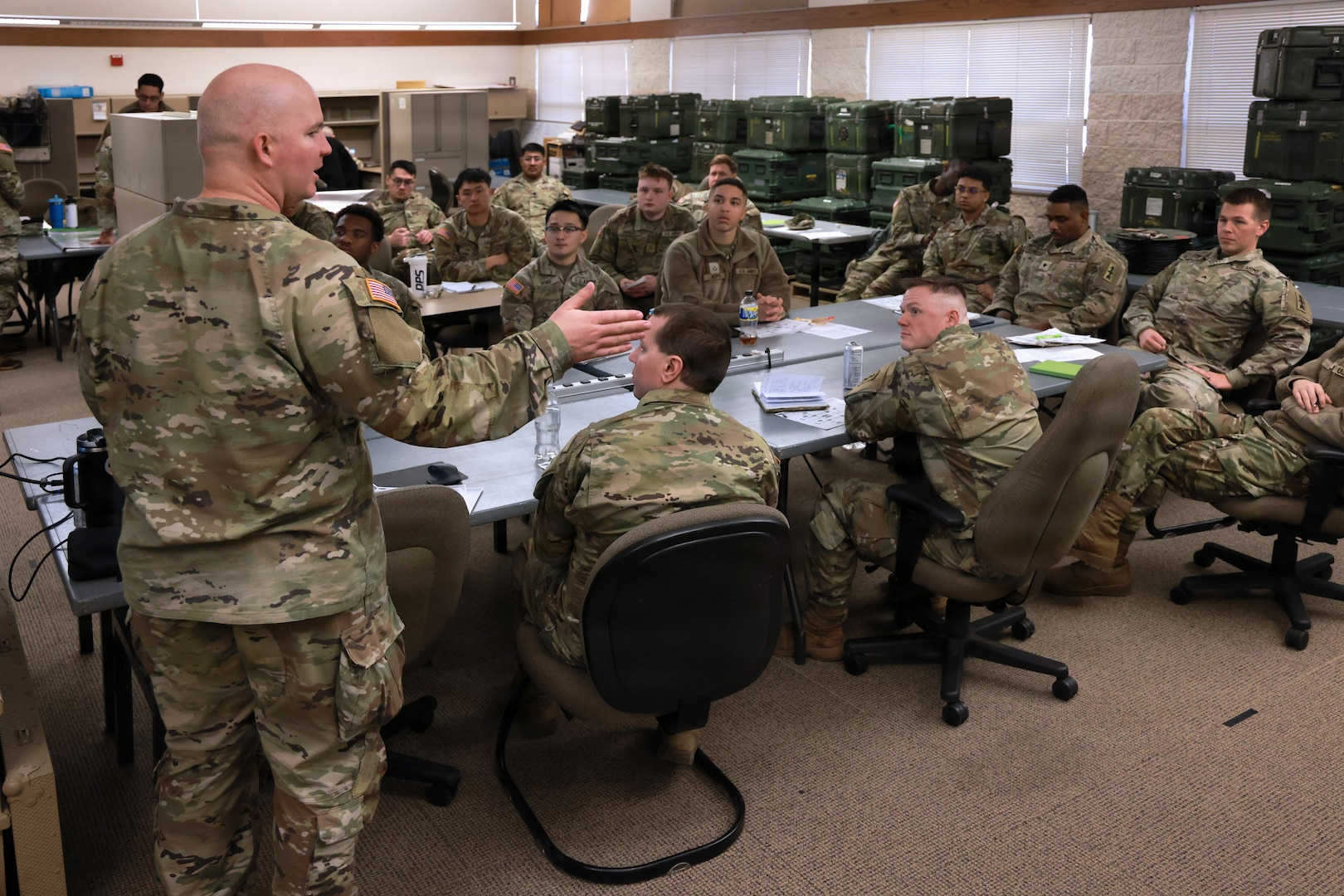
Learn more about the education benefits and resources available to you and your dependents! Contact our office to discuss which options may be best for you and your family at ngwi.edu@army.mil.
You may also call:
Education Services Officer: 608-242-3447
Education Services Specialist / GI Bill Manager: 608-242-3449
State Education Benefits
Federal Tuition Assistance (FTA)
Tuition-only assistance for current Soldiers that covers up to $250 per credit.
Benefit for: Drilling Guard Member, AGR
Federal Tuition Assistance (FTA) is tuition-only assistance paid directly to qualifying schools. FTA is typically recommended for Soldiers pursuing education at out-of-state schools (especially online) or higher-cost programs at private schools.
- What you get:
- Tuition (not fees) up to $250 per credit paid directly to the school.
- Covers up to 18 semester hours each fiscal year (1 October – 30 September), totaling no more than $4500 per year (shared with Credentialing Assistance – see below).
- Lifetime credit limits:
- 130 undergraduate
- 39 graduate
- 21 towards an academic certificate
- How to qualify:
- Be currently serving in the ARNG, officer or enlisted, in good standing.
- Not be flagged.
- Have a high school diploma or equivalent.
- Not using an ROTC Scholarship under Title 10 USC, Section 2107.
- Maintain a 2.0+ undergraduate GPA or a 3.0+ graduate GPA.
- How to use it:
- You can use FTA to fund a master’s degree or below. It cannot be used toward professional or doctoral degrees.
- Cannot be used on a credential equal to or lower than one you’ve already achieved (i.e. an associate’s degree when you already have a bachelor’s).
- Service Obligations:
- Officers and warrant officers who are AGR have a 2-year active-duty service obligation that begins after their last FTA-funded course ends.
- Officers and warrant officers who are drilling have a 4-year active-duty service obligation that begins after their last FTA-funded course.
- Enlisted members have an expiration term of service (ETS) 14+ days after completion of an FTA-funded course.
- How to apply:
- All FTA requests need to be approved 8 days before the course start date with no exceptions. Requests can be submitted up to 60 days prior to beginning courses. social security number
- Step 1: Complete Training.
- Watch the ArmyIgnited 101 training.
- Log into ArmyIgnited. You will need a CAC reader to access the website.
- Create a message (Education Goal can be selected as the category) and write “I completed ArmyIgnited 101 training on this date:_____”
- Complete the Virtual Benefits Training by clicking Education Programs > Virtual Benefits Training.
- Step 2: Complete Career Interests Assessment
- Create an account on DANTES Kuder Journey: dantes.kuder.com.
- Select Army National Guard as your branch.
- Click Yes under “Assigned to a Joint Base?”
- Select Branch – Army – Army National Guard Bureau under “Region.”
- Your Ed Center Location is Wisconsin Army National Guard.
- Fill out the rest of your personal information.
- Complete the Career Interests Assessment, then download your One Page Summary from Kuder Journey.
- Return to ArmyIgnited, click on Career Path DECIDE > Create New Plan.
- Upload and submit your One Page Summary
- Create an account on DANTES Kuder Journey: dantes.kuder.com.
- Step 3: Create an Education Goal
- Download your degree plan from your school portal. This is often called a degree audit or degree progress report.
- The degree plan needs to include your name, student ID, program of study, and how many credits you’ve earned towards requirements of that program.
- You can only upload your degree plan while creating your education goal. If you need a degree plan uploaded after creating your education goal, email it to ngwi.edu@army.mil.
- Log into ArmyIgnited and click on Education Goals > Create New Goal.
- Follow the prompts to select your degree, institution, and upload your degree plan.
- Wait 1-5 business days for your education goal to be approved before submitting funding requests.
- Download your degree plan from your school portal. This is often called a degree audit or degree progress report.
- Step 4: Create Tuition Assistance Request (TAR)
- Log into ArmyIgnited and click on Active Education Goals > Apply for Funding.
- Verify your contact information and edit if needed.
- Follow the prompts to accept the user agreement and verify your education center (Wisconsin Army National Guard) and institution information.
- Select the correct term or input different dates.
- Add all information for one course.
- Follow any remaining prompts then click Submit.
- You will repeat this process for each course. Do not list multiple courses in one TAR.
- Common Issues:
- Not completing all steps in the application process. Ensure you’ve read and followed all directions above.
- Incorrect civilian education level in IPPS-A. Check with your unit to make sure any prior degrees are reflected correctly.
- Submitting a degree plan that doesn’t meet requirements.
- Not finding your degree program or classes in ArmyIgnited. Your school needs to add these, so reach out to your School Certifying Official for FTA point of contact. If the deadline to submit your request is coming up quickly, reach out to the Education/Incentives Office for help.
- Not monitoring your email and ArmyIgnited messages. If there’s an issue with your tuition assistance request, someone will reach out to you – make sure you’re keeping an eye out for messages.
Other Things to Know:
- Can I use other benefits?
- Yes. You can typically combine FTA with your Montgomery GI Bill – Chapter 1606 or Chapter 30. It cannot be used as the Wisconsin GI Bill. But, you can combine FTA with other tuition-paying benefits if your tuition isn’t fully covered because you attend a private school or an out-of-state school. FTA is commonly combined with the Wisconsin National Guard Tuition Grant, Wisconsin Veterans Grant for Private/Non-Profit Colleges, or the Post 9/11 GI Bill (See below) at less than 100%.
- When do my grades need to be updated?
- Your school should update grades for all completed courses no later than 30 days after the course end date. If your grades haven’t been updated, check with your school or submit an unofficial transcript to ngwi.edu@army.mil.
- Can FTA funds be recouped?
- Yes. You will be subject to recoupment if you:
- Receive a failing grade – D or F for undergraduate degrees, and C, D, or F for graduate degrees.
- Receive an incomplete for the course and not complete requirements within 180 days
- Withdraw from a course without an approved recoupment waiver. Recoupment waivers must be submitted in ArmyIgnited within 30 days of your school post a “W” or “Withdrawal” grade.
- You do not complete your service obligation.
- If you receive two recoupments in the same fiscal year, your access to FTA may be suspended.
- Yes. You will be subject to recoupment if you:
Credentialing Assistance (CA)
Offers up to $2,000 per fiscal year for obtaining professional licenses and certifications.
Benefit for: Drilling Guard Member, AGR
The Credentialing Assistance (CA) Program provides Soldiers with funding for more than 1,900 approved credentials. CA pays expenses for course training, materials, supplies, textbooks, and exams.
- What you get:
- Up to $2,000 each fiscal year (1 October – 30 September). This is shared with Federal Tuition Assistance (FTA) (see below), so any CA funding used counts against your $4,500 annual limit for FTA.
- Some aviation-related credentials are limited to $1,000 per year.
- You are limited to one credential per fiscal year and 3 credentials for every 10 years of service (recertifications don’t count towards these limits).
- How to qualify:
- Be currently serving in the ARNG, officer or enlisted, in good standing.
- Not be flagged.
- Have a high school diploma or equivalent.
- Not using an ROTC Scholarship under Title 10 USC, Section 2107.
- Have an ETS or MRD that is 31+ days after completion of a CA-funded course.
- How to use it:
- You can find approved programs by using the full credential search. The credential does not have to be related to your MOS or AOC.
- How to apply:
- All CA requests need to be approved 45 days before the course start date with no exceptions. Requests can be submitted up to 90 days prior to beginning courses.
- Full application instructions are on the Army Credentialing Assistance (CA) Program webpage. Contact the Education/Incentives Office if you have questions!
- You must take the associated exam within 180 days of completing training or you could be subject to recoupment. Factor this in if you’re trying to finish a credential close to retirement or separation!
- Common Issues:
- Not completing all steps in the application process. Ensure you’ve read and followed all directions above.
- Bundling funding requests together – each should be submitted separately.
- Not monitoring your email and ArmyIgnited messages. If there’s an issue with your tuition assistance request, someone will reach out to you – make sure you’re keeping an eye out for messages.
Other Things to Know:
- Can I get reimbursed for credentials under CA?
- No. All expenses are paid prior to the course/exam start date – you won’t be reimbursed for paying out of pocket.
- When does training completion need to be updated?
- You need to provide proof of training completion within 30 days of the training end date to avoid recoupment. If you need an extension to complete your training, you need to request that in ArmyIgnited prior to course completion.
- Can CA funds be recouped?
- Yes. You will be subject to recoupment if you:
- Fail an exam/course.
- Withdraw from a course, unless you obtain an approved recoupment waiver. Recoupment waivers must be submitted in ArmyIgnited no later than 30 days after you receive the recoupment notice.
- Fail to take your exam within 180 days of completing the training.
- Fail to complete your service obligation.
- If you receive two recoupments in the same fiscal year, your access to FTA may be suspended.
- Yes. You will be subject to recoupment if you:
Montgomery GI Bill – Selected Reserve (Chapter 1606)
Monthly stipend for Soldiers with a 6-year contract, high school completion, and initial active-duty training (IADT) completion.
Benefit for: Drilling Guard Member, AGR
You may qualify for additional entitlement under the Rudisill decision.
If you previously relinquished your Montgomery GI Bill – Selected Reserve (Chapter 1606) to use your Post 9/11 GI Bill, you may be eligible for additional months of entitlement.
Contact ngwi.edu@army.mil or 608.242.3448 with questions on how the Rudisill decision may affect you.
The Montgomery GI Bill® – Selected Reserve (Chapter 1606) is a benefit administered by the Department of Veterans Affairs (VA) that provides a monthly stipend for Soldiers in the Selected Reserve who pursue civilian education.
- What you get:
- Up to 36 months of entitlement.
- $481 per month for full-time enrollment (Effective 1 October 2024 – 30 September 2025) paid directly to you.
- Find more information on payment rates here: Montgomery Selected Reserve Rates
- Did you enlist with a GI Bill Kicker? You will receive your GI Bill Kicker monthly with your Chapter 1606 payment.
- How to qualify:
- Sign a six-year enlistment contract or Officer Service Agreement (OSA) to serve in the National Guard.
- Have a high school diploma or equivalent.
- Complete Initial Active Duty Training (IADT) or Basic Officer Leadership Course (BOLC).
- Not be flagged for unsatisfactory participation (AWOL).
- Not be using a ROTC Scholarship under Title 10 USC, Section 2107.
- Be actively serving in the National Guard (cannot be in the Inactive National Guard-ING or Individual Ready Reserve-IRR).
- You can continue to receive Chapter 1606 benefits if you meet the eligibility requirements and are separated due to a disability not caused by willful misconduct. If you became eligible on or after June 30, 2008, you have up to 14 years from your discharge date to use these benefits.
Note: AGRs who gained eligibility for Chapter 1606 after 30 June 2008 are eligible to keep their eligibility after starting AGR orders. Reach out to our office with questions!
- How to apply:
- Gather the following information:
- social security number
- bank account direct deposit information
- education and military history
- name of school you want to attend or are attending
- Submit the online application at www.va.gov.
- You are not required to send a copy of your Notice of Basic Eligibility (NOBE) to the VA when you apply. If you qualify, we make sure the VA knows you’re eligible.
- If you have a Kicker, select “Yes” when asked.
- The VA will mail you a Certificate of Eligibility (COE) at least 30 days after your application.
- Provide your COE or statement of benefits to your School Certifying Official (SCO), so they can certify your enrollment to the VA.
- Continue to verify your enrollment each month.
- Gather the following information:
Note: If you receive a denial letter from the VA, email a photo or scan of your letter to ngwi.edu@army.mil or call 608.242.3449 for assistance.
- How to use it:
- You can use your GI Bill while pursuing opportunities like undergraduate and graduate (including doctorate) degrees, on-the-job training, and apprenticeships.
- Your GI Bill can only be used while taking classes that are required for your degree. It’s often a good idea to declare your major early and verify your courses meet requirements with your SCO before starting classes.
Other Things to Know:
- Can I use other benefits?
- Yes. You can typically combine your Chapter 1606 with a tuition-paying benefit like the Wisconsin National Guard Tuition Grant, the Wisconsin GI Bill, Wisconsin Veterans Grant for Private/Non-Profit Colleges, or Federal Tuition Assistance (see above).
- What is the 48-Month Rule?
- Federal GI Bills generally provide benefits for up to 36 months. It’s possible to receive up to 48 months of GI Bill benefits overall if you qualify for more than one GI program. For instance, if you’ve used all 36 months of your Chapter 1606 benefits, you might be able to receive an additional 12 months from the Post 9/11 GI Bill.
- Can my Chapter 1606 be reinstated if I have a break in service?
- Yes. If you are assigned to the Inactive National Guard (ING) or Individual Ready Reserve (IRR) for less than 12 months (or 36 months for missionary work), your benefits may be reinstated. If you are not actively drilling for a longer period of time or enter the ING / IRR for a second time, your Chapter 1606 will be terminated. However, your Chapter 1606 benefits will be terminated if you are not actively drilling for a longer time period, or if you re-enter the ING/IRR a second time.
- Do my monthly payments stop if I’m flagged?
- Typically, no. Your Chapter 1606 will be terminated if you are flagged for being AWOL. Otherwise, your payments will continue.
GI Bill® is a registered trademark of the U.S. Department of Veterans Affairs (VA). More information about education benefits offered by VA is available at the official U.S. government website at the official U.S. government website.
GI Bill Kicker
Additional payments added to a federal GI Bill for qualified Servicemembers.
Benefit for: Drilling Guard Member, AGR
The GI Bill® Kicker program encourages qualified applicants and Soldiers to enlist into critical military jobs and units. This program applies only to specific critical Military Occupational Specialties (MOSs) and certain deployable units. New officers and Soldiers in a commissioning program may also be eligible. You can only receive one valid kicker during your career.
- What you get:
- Up to 36 months of entitlement.
- $200 or $350 per month depending on your contracted rate.
- Payment is made directly to you with the monthly stipend from Chapter 1606, 30, or 33.
- How to qualify:
- Be eligible for Chapter 1606 or Chapter 30.
- Sign a 6-year service obligation (enlistment contract, extension, or Officer Service Agreement).
- Complete MOS or branch qualification in contracted skill.
- Not be a dual-status (title 32) technician in a permanent or indefinite status (longer than 180 days).
- Not be using or have ever received a ROTC scholarship Title 10 USC, Section 2107.
- Meet the additional criteria for one of the below categories.
- How to apply:
- Not sure if you have a Kicker? Reach out to our office for help before applying.
- Follow the application steps for Chapter 1606, Chapter 30 or Chapter 33.
- Select “Yes” when asked if you have a kicker.
- If you would like to use your Kicker with Chapter 33, you must first revoke either Chapter 1606 or Chapter 30.
- Log into AskVA using your va.gov account.
- Submit a question using the “Education benefits and work study” category and state the following:
- “I would like to give up my Montgomery GI Bill – Chapter (1606 or 30) in order to receive my Kicker payments with my Post 9/11 GI Bill.”
- Giving up your Montgomery GI Bill may reduce the total amount of federal GI Bill benefits you can receive. We recommend reaching out to our office first to talk about your options!
- Kicker Categories:
- Non-Prior Service – $350
- ASVAB score of 50 or above.
- High school diploma or equivalent.
- Enlist into a critical skill or unit.
- Prior Service – $350
- ASVAB/AFCT score of 50 or above.
- Duty MOS-Qualified in contracted MOS.
- If enlisting from a branch of service other than Army, you must meet the requirements to be awarded your contracted MOS at the time of enlistment into the Army National Guard.
- Pay grade E7 or below.
- Reenlistment – $350
- Reenlist or extend to have at least 6 years remaining on your contract.
- Served at least 3 consecutive but not more than 14 total years of service.
- ASVAB/AFCT score of 50 or above.
- Duty MOS-Qualified in contracted MOS.
- Pay grade E7 or below.
- Standard Officer Kicker – $350
- Accept commission into the ARNG regardless of commissioning source, including a direct commission or officers without a bachelor’s degree.
- Sign the Officer Service Agreement and Kicker contract within one year of commissioning (both must be signed on the same date).
- Complete branch qualification requirements in order to receive payment.
- Officer Candidate School (OCS) – $350
- Have completed IADT and been awarded an enlisted MOS.
- Enrolled into the OCS program and been awarded 09S MOS.
- Have not commissioned.
- Complete an extension and Kicker contract.
- Must complete OCS and accept a commission in the ARNG to retain this incentive.
- Reserve Officers Training Corps (ROTC) – $350
- Have completed IADT and been awarded an enlisted MOS.
- Enrolled into the ROTC program and been awarded 09R MOS.
- Have not received a ROTC scholarship under Title 10 USC, Section 2107.
- Have not commissioned.
- Complete an extension and Kicker contract.
- Complete a Simultaneous Membership Program (SMP) Program Agreement and ROTC Cadet Contract.
- Must complete ROTC and accept a commission in the ARNG to retain this incentive.
- Warrant Officer Candidate (WOC) – $350
- Have completed IADT and been awarded an enlisted MOS.
- Enrolled into the WOC program and been awarded 09W MOS.
- Have not commissioned.
- Complete an extension and Kicker contract.
- Must complete Warrant Officer Candidate School and accept a position as a warrant officer in the ARNG to retain this incentive.
- Officer Supplemental (Bump-Up) – $350
- Rate increase for an existing Kicker issued at a lower amount.
- Have previously contracted and established eligibility for an enlisted accession Kicker at the $100 or $200 rate.
- Be enrolled in a commissioning program or accept a commission in the ARNG.
- Sign the Kicker Supplemental addendum no later than one year after commissioning.
- If you have completed your initial 6-year obligation, no additional service obligation is required. Otherwise, you must complete the remainder of your original service obligation to retain the Bump-Up rate. An Officer Service Agreement is not required.
- Non-Prior Service – $350
GI Bill® is a registered trademark of the U.S. Department of Veterans Affairs (VA). More information about education benefits offered by VA is available at the official U.S. government website at the official U.S. government website.
Montgomery GI Bill – Active Duty (Chapter 30)
Monthly stipend for veterans who served on active duty or AGR who opted into the program.
Benefit for: Veteran, AGR
You may qualify for additional entitlement under the Rudisill decision.
If you have two or more qualifying periods of active duty, you may now qualify for up to 48 months of entitlement. See “What is the 48-Month Rule?” below. You must be eligible for benefits through the Post-9/11 GI Bill and the Montgomery GI Bill Active Duty (Chapter 30).
Note: Even if you gave up your right to use MGIB-AD benefits in the past (this is called “relinquishing” your benefits), you may now qualify to use some of that entitlement.
Contact ngwi.edu@army.mil or 608.242.3447 with questions on how the Rudisill decision may affect you.
The Montgomery GI Bill® (Chapter 30) is a benefit administered by the Department of Veterans Affairs (VA) that provides education assistance for veterans who served on active duty or Active Guard Reserve (AGR) for at least two years.
- What you get:
- Up to 36 months of entitlement.
- Current payment rates for full-time enrollment (Effective 1 October 2024 – 30 September 2025):
- 3 or more years of service: $2,438 per month
- 2 years of service: $1,978 per month
- Find more information on payment rates here: Montgomery Active Duty Rates
- Did you enlist with a GI Bill Kicker? You can receive your GI Bill Kicker monthly with your Chapter 30 payment.
- If on active duty, you can use Chapter 30 as a “Top-UP” to your Federal Tuition Assistance (FTA).
- With the Top-Up program, Federal Tuition Assistance (FTA) is paid first. Then, Chapter 30 will cover any remaining tuition and fees not paid by FTA, up to your monthly Chapter 30 benefit rate.
- While using Chapter 30, you may be eligible for in-state tuition rates at public schools, even if you are not a state resident. To qualify, you must live in the state when classes start and meet criteria as a qualifying individual. Visit the VA’s Veterans Choice Act webpage for more information.
- How to qualify:
- Served at least two years on active duty on or after July 1, 1985, and received an honorable discharge.
- Served at least two years in the AGR program after November 29, 1989, and received an honorable discharge.
- Pay into the program during your first eligible period of service.
- If you are AGR, you can choose to pay a lump sum or set up deductions from your paycheck of $100 per month for 12 months.
- You may contribute up to an additional $600 ONLY while on Active Duty orders.
- To buy-in, contact our office at ngwi.edu@army.mil or 608.242.3449.
- Optional Plus-Up program
- You may contribute up to an additional $600 ONLY while on Active Duty.
- Every $20 contribution increases you monthly payment by $5 – the full $600 contribution increases your monthly payment by $150 if you’re a full-time student.
- Soldiers on Active Duty will NOT receive the additional payment.
- Period of eligibility:
- Chapter 30 benefits expire 10 years from the end of your last period of qualifying active duty service. This 10-year window can be reset if you complete a new period of qualifying service. For example, if you previously served in the Regular Army and then joined the AGR program, your benefits will expire 10 years from your AGR separation date.
- How to apply:
- Gather the following information:
- social security number
- bank account direct deposit information
- education and military history
- name of school you want to attend or are attending
- Submit the online application at www.va.gov.
- If you have a Kicker, select “Yes” when asked.
- The VA will mail you a Certificate of Eligibility (COE) at least 30 days after your application.
- Provide your COE or statement of benefits to your School Certifying Official (SCO), so they can certify your enrollment to the VA.
- Continue to verify your enrollment each month.
- Gather the following information:
- How to use it:
- You can use your GI Bill while pursuing opportunities like undergraduate and graduate (including doctorate) degrees, non-college degrees, on-the-job training, and apprenticeships.
- Your GI Bill can only be used while taking classes that are required for your degree. It’s often a good idea to declare your major early and verify your courses meet requirements with your SCO before starting classes.
Other Things to Know:
- Can I use other benefits?
- Yes. You can typically combine your Chapter 30 with a tuition-paying benefit like the Wisconsin National Guard Tuition Grant, the Wisconsin GI Bill, Wisconsin Veterans Grant for Private/Non-Profit Colleges, or Federal Tuition Assistance (see above).
- What is the 48-Month Rule?
- Federal GI Bills generally provide benefits for up to 36 months. It’s possible to receive up to 48 months of GI Bill benefits overall if you qualify for more than one GI program. For instance, if you’ve used all 36 months of your Chapter 30 benefits, you might be able to receive an additional 12 months from the Post 9/11 GI Bill.
- Can I receive a refund of my $1,200 buy-in?
- You may receive a refund of your $1,200 buy-in if you chose to use your Post 9/11 GI Bill benefits instead of your Chapter 30. The $600 Plus-Up is not refundable. Learn more on the VA’s website.
GI Bill® is a registered trademark of the U.S. Department of Veterans Affairs (VA). More information about education benefits offered by VA is available at the official U.S. government website at the official U.S. government website.
Post 9/11 GI Bill (Chapter 33)
Monthly stipend for veterans who served on after September 11, 2001 and receive an honorable discharge.
Benefit for: Veteran, Drilling Guard Member, AGR
You may qualify for additional entitlement under the Rudisill decision.
If you have two or more qualifying periods of active duty, you may now qualify for up to 48 months of entitlement. See “What is the 48-Month Rule?” below. You must be eligible for benefits through the Post-9/11 GI Bill and a Montgomery GI Bill (MGIB).
Note: Even if you gave up your right to use MGIB benefits in the past (this is called “relinquishing” your benefits), you may now qualify to use some of that entitlement.
Contact ngwi.edu@army.mil or 608.242.3447 with questions on how the Rudisill decision may affect you.
The Post 9/11 GI Bill® (Chapter 33) is a benefit administered by the Department of Veterans Affairs (VA) that provides educational assistance to veterans and current Servicemembers with qualifying active duty service after September 11, 2001. This benefit can be transferred to dependents with a Transfer of Education Benefits (TEB) (see below) request.
- What you get:
- Up to 36 months of entitlement.
- Eligible veterans may receive additional entitlement if eligible for the Edith Nourse Rogers STEM scholarship.
- Tuition paid directly to the school:
- Up to 100% of in-state tuition and fees at public schools.
- Up to $28,937.09 per year at private and foreign schools.
- While using Chapter 33, you may be eligible for in-state tuition rates at public schools, even if you are not a state resident. To qualify, you must live in the state when classes start and meet criteria as a qualifying individual. Visit the VA’s Veterans Choice Act webpage for more information.
- The Yellow Ribbon Program can help you pay for higher out-of-state, private school, foreign school, or graduate school tuition and fees that the Post-9/11 GI Bill doesn’t cover.
- Book stipend paid directly to the student: Up to $1,000 per year.
- Monthly housing stipend paid directly to the student:
- The amount is based off the basic allowance for housing (BAH) rate for an E-5 with dependents for the school’s zip code for in-person classes.
- If you are in an online program, the housing stipend is a flat rate nationally of up to $1,118.50 per month.
- You must be enrolled more than half-time.
- You and your spouse (using transferred benefits) cannot receive the monthly housing stipend while you are serving on qualifying active duty orders.
- Did you enlist with a GI Bill Kicker? You can receive your GI Bill Kicker with your monthly housing stipend.
- Payment rates depend on your qualifying active duty time and are based on these eligibility tiers:
- At least 1,095 days (36 months), or special circumstance (see How to qualify): 100%
- 910 to 1,094 days (30 to 35 months): 90% of the full benefit
- 730 to 909 days (24 to 29 months): 80% of the full benefit
- 545 to 729 days (18 to 23 months): 70% of the full benefit
- 180 to 544 days (6 to 17 months): 60% of the full benefit
- 90 to 179 days (90 days to 5 months): 50% of the full benefit
You can find current payment rates and approved schools, employers, licenses, etc. using the GI Bill Comparison Tool.
- Up to 36 months of entitlement.
- How to qualify:
- Serve at least 90 days in a period of qualifying active duty after September 11, 2001 and received an Honorable discharge:
- Title 10 sections 688, 12301(a), 12301(d), 12301(g), 12301(h), 12302, 12304, 12304a, or 12304b.
- These sections include overseas deployments, mobilizations, and service in an active component of any branch of the U.S. military.
- Title 32 or Title 10 AGR.
- Title 32, Section 502(f) for service during a national emergency that falls under one of these operations:
- Operation Noble Eagle (Sep 11, 2001 – May 31, 2002)
- Operation Guardian Shield (Feb 15, 2019 – Jan 20, 2021)
- COVID-19 Pandemic Response (March 22, 2020 -– July 1, 2022)
- Support of the Capitol Police/59th Inauguration (January 11, 2021- May 23, 2021).
- Basic training and AIT, if completed after Sep 11, 2001, can be added to qualifying time if you have completed 24 months of other eligible active duty listed above.
- Title 10 sections 688, 12301(a), 12301(d), 12301(g), 12301(h), 12302, 12304, 12304a, or 12304b.
- Serving 30 continuous days with an Honorable discharge due to a service-connected disability or injury qualifies you for 100% eligibility.
- Receiving a Purple Heart and an Honorable discharge after any amount of service qualifies you for 100% eligibility.
- Non-qualifying service:
- A period of active duty with a discharge that is less than Honorable.
- Title 32 for Full-Time National Guard Duty – Operational Support or Other Training Duty (unless listed above). For example, Counter Drug orders fall in this category.
- Recipients of ROTC scholarships under Title 10 USC, Sec. 2107 have a 4-year exclusionary period after commissioning during which you cannot earn Chapter 33 eligibility.
- The service obligation from a Service Academy contract.
- Active Duty used for Active Duty Loan Repayment (Title 10, Sec. 109).
- Serve at least 90 days in a period of qualifying active duty after September 11, 2001 and received an Honorable discharge:
- Period of eligibility:
- Your Chapter 33 benefits do not expire if your most recent period of qualifying service ended on or after January 1, 2013 under the Forever GI Bill.
- If your qualifying service ended before January 1, 2013, your benefits have an expiration date. They will expire 15 years after your last period of qualifying service ended, not from your separation date from the Wisconsin Army National Guard. You must use all of your benefits by that time or you’ll lose whatever’s left.
- If you complete another period of service that qualifies for the Forever GI Bill after your benefits expired, your prior periods of qualifying service will roll forward. The new period of eligibility may be used to increase your eligibility percentage. You will not receive any additional months of benefits, only what you had remaining when your benefit expired.
Example: SFC Jones deployed in 2009 and was on mobilization orders for 10 months, earning 36 months of the Post 9/11 GI Bill at 60%. He used 12 months of the benefit before it expired in 2024. He deployed again for 10 months in 2025. SFC Jones is now eligible for the Post 9/11 GI Bill at 70% for the remaining 24 months of his benefit, and these months do not expire.
- How to apply:
- Gather the following information:
- social security number
- bank account direct deposit information
- education and military history
- name of school you want to attend or are attending
- Submit the online application at www.va.gov.
- If you have a Kicker, you have to give up your Montgomery GI Bill – Selected Reserve (Chapter 1606) in order to receive your Kicker payments with your monthly housing stipend.
- We recommend reaching out to our office for counseling on maximizing your months of GI Bill before giving up a Montgomery GI Bill.
- If you decide to receive your Kicker with your Chapter 33, send a message to the VA stating “I would like to give up my Montgomery GI Bill – Chapter 1606 in order to receive my Kicker with my Post 9/11 GI Bill.”
- The VA will mail you a Certificate of Eligibility (COE) at least 30 days after your application. You can also check on your eligibility by using the Check your Post 9/11 GI Bill tool.
- Provide your COE or statement of benefits to your School Certifying Official (SCO), so they can certify your enrollment to the VA.
- Continue to verify your enrollment each month.
- Gather the following information:
Note: If you receive an eligibility percentage you believe is incorrect or a denial letter from the VA, email a photo or scan of your letter to ngwi.edu@army.mil for assistance.
- How to use it:
- You can use your GI Bill while pursuing opportunities like undergraduate and graduate (including doctorate) degrees, on-the-job training, and apprenticeships.
- Your GI Bill can only be used while taking classes that are required for your degree. It’s often a good idea to declare your major early and verify your courses meet requirements with your SCO before starting classes.
Other Things to Know:
- Can I use other benefits?
- Yes. If Chapter 33 doesn’t cover your full tuition and fees, you may be able to combine it with other tuition-only state benefits for Federal Tuition Assistance.
Keep in mind that the federal VA is the last payer, so most other tuition-only education benefits or aid must be applied before the school can bill the VA. If you’re considering using the Wisconsin National Guard Tuition Grant, Wisconsin Veterans Grant, or Federal Tuition Assistance along with your Chapter 33 benefits, check with your SCO to determine the best approach.
- What is the 48-Month Rule?
- Federal GI Bills generally provide benefits for up to 36 months. It’s possible to receive up to 48 months of GI Bill benefits overall if you qualify for more than one program. For instance, if you’ve used all 36 months of your Chapter 1606 benefits, you might be able to receive an additional 12 months from the Post 9/11 GI Bill.
If you only have one qualifying period of service for both Chapter 30 and Chapter 33, you will be limited to 36 months of benefits. To review your qualifying periods of service, please reach out to ngwi.edu@army.mil or 608.242.3447.
- What if I paid into the Montgomery GI Bill – Active Duty (Chapter 30)?
- You may receive a refund of your $1,200 buy-in if you chose to use your Post 9/11 GI Bill benefits instead of your Chapter 30. The $600 Plus-Up is not refundable. Learn more on the VA’s website.
GI Bill® is a registered trademark of the U.S. Department of Veterans Affairs (VA). More information about education benefits offered by VA is available at the official U.S. government website at the official U.S. government website.
Transfer of Education Benefits (TEB)
An incentive for continued service offered to Servicemembers who qualify for the Post 9/11 GI Bill.
Benefit for: Veteran, AGR
Transfer of Education Benefits (TEB) is an incentive for continued service offered to Servicemembers who qualify for the Post 9/11 GI Bill® (see above). An approved TEB request allows you to share your Post 9/11 GI Bill with eligible dependents. Depending on how many months of federal benefits you’ve used previously, you may be awarded up to 36 months of the Post 9/11 GI Bill. You still have complete control over Post-9/11 GI Bill benefits and can still use the benefit yourself after receiving approval to transfer.
- How to qualify:
- Must have 6 creditable years of service in any branch/component of the U.S. military.
- Must have 4 years remaining on your contract. Your TEB request will be denied if your ETS or MRD is less than 4 years away.
- Have at least 90 days of qualifying service for the Post 9/11 GI Bill that has not expired.
- Review our Post 9/11 GI Bill webpage (see above) for more information on qualifying service and payment eligibility tiers. If you’re not sure if you have qualifying service, please reach out to our office.
- Cannot be flagged.
- Must have eligible dependents in DEERS.
- Dependents who are veterans or current Servicemembers may still have benefits transferred to them.
- Children (including stepchildren) must be under age 21, or under 23 if they are a full-time student, on the date of the TEB request.
- A ward or foster child is also eligible if placed in your legal custody as a result of a court order for at least 12 months prior to requesting TEB.
- When can my dependents use benefits?
- Spouses can use transferred benefits right away.
- Children can use benefits after you’ve completed 10 years of service.
- Must be at least 18 years of age or graduated high school.
- Must use benefits before their 26th birthday.
- What happens if my Post 9/11 GI Bill expires?
- If your last period of qualifying service ended after 1 January 2013, your eligibility falls under the Forever GI Bill and does not expire. Your benefit expires after 15 years if your last period of qualifying service ended before this date.
- Once your benefit expires, you and your spouse can no longer use it. Your children can still use the benefit between ages 18-26, even after the 15 years is up. This is why it’s important to TEB before your benefit expires!
- How does the 48-Month Rule impact my TEB?
- Federal GI Bills generally provide benefits for up to 36 months. It’s possible to receive up to 48 months of GI Bill benefits overall if you qualify for more than one program. For instance, if you’ve used all 36 months of a Montgomery GI Bill, you may only have 12 months of the Post 9/11 GI Bill to transfer to your dependents.
- If you only have one qualifying period of service for both Chapter 30 and Chapter 33, you will be limited to 36 months of benefits. We recommend reaching out to our office to discuss this before submitting a TEB request.
- You can estimate how many months of the Post 9/11 GI Bill you can transfer to dependents by:
- Send the VA a message or call the GI Bill Hotline (888-442-4551) to ask how many months of Chapter 1606 or Chapter 30 you’ve used. Subtract this number from 48 (unless you only have one period of service that qualifies for both Chapter 30 and the Post 9/11 GI Bill).
- If you’ve used the Post 9/11 GI Bill before, log into your va.gov account and check your remaining benefits.
- How to request TEB:
- Verify you meet eligibility. If an extension is required, first contact your Retention NCO.
- Complete the online application on milConnect.
- Navigate to Transfer my education benefits.
- For each eligible family member that you want to receive benefits, enter the number of months to transfer (recommendation is to give each dependent at least one month).
- Select the Post-9/11 GI Bill Chapter 33 radio button in the Select the educational program from which to transfer benefits section.
- Select all the boxes in the Transferability of Education Benefits Acknowledgements section to indicate that you have read and understand each statement.
- Click Submit Request.
Note: You will receive a confirmation email to your @army.mil address, and milConnect will update with an approval/rejection once your TEB request is processed. If you receive a denial that you believe was in error, reach out to ngwi.edu@army.mil or 608.242.3447 for assistance.
- How to apply for benefits:
- Gather the following information:
- social security number
- bank account direct deposit information
- education history
- name of school you want to attend or are attending
- Each dependent must establish their own account on va.gov.
- Once logged in, your dependent will fill out the online application by navigating to VA Benefits and Health Care ® Family Member Benefits ® Education and Career Benefits for Family Members ® Transferred Post 9/11 GI Bill Benefits.
- The VA will mail a certificate of eligibility (COE). Application processing can take around 30-45 days.
- They will notify their School Certifying Official (SCO), so their enrollment is certified to the VA.
- Continue to verify their enrollment each month.
- Gather the following information:
GI Bill® is a registered trademark of the U.S. Department of Veterans Affairs (VA). More information about education benefits offered by VA is available at the official U.S. government website at the official U.S. government website.
Veteran Readiness & Employment (Chapter 31)
Program for veterans and Servicemembers with service-connected disabilities and a barrier to employment.
Benefit for: Veteran, AGR
Veteran Readiness & Employment (VR&E or Chapter 31) is a program administered by the Department of Veterans Affairs (VA) that helps Servicemembers and veterans with service-connected disabilities and a barrier to employment prepare for, find, and maintain suitable jobs through counseling and case management. Services are individualized and based on the Servicemember or veteran’s needs.
- What VR&E provides:
- Post-secondary training at a college, vocational, technical or business school.
- This typically includes tuition coverage, monthly subsistence stipends, and a book stipend.
- While using VR&E, you may be eligible for in-state tuition rates at public schools, even if you are not a state resident. To qualify, you must live in the state when classes start and meet criteria as a qualifying individual. Visit the VA’s Veterans Choice Act webpage for more information.
- Interest and aptitude testing, and career counseling.
- Job-training, job-seeking skills, resume development, and work-readiness assistance.
- Independent living services for individuals who are not currently able to work because of the effects of service-connected disabilities and who require intensive and frequent rehabilitation support to become more independent in their homes and communities.
- Post-secondary training at a college, vocational, technical or business school.
- How to qualify:
- Honorable or other than dishonorable discharge.
- Service-connected disability rating from the VA of at least 10%, or a memo rating of at least 20%.
- Serious employment handicap needed to establish entitlement for Veterans rated 10%.
- Servicemembers with disabilities participating in the Integrated Disability Evaluation System (IDES) may receive automatic VA enrollment. Learn more about accessing VR&E through IDES.
- Period of eligibility:
- If you were discharged from active duty before January 1, 2013, your basic period of eligibility ends 12 years from one of these dates, whichever comes later:
- The date you received notice of your date of separation from active duty, or
- The date you received your first VA service-connected disability rating.
- If you were discharged from active duty on or after January 1, 2013, the 12-year basic period of eligibility doesn’t apply to you. There’s no time limit on your eligibility.
- If you were discharged from active duty before January 1, 2013, your basic period of eligibility ends 12 years from one of these dates, whichever comes later:
- Entitlement under VR&E:
- The VA will determine how much entitlement you’re authorized under this program based on your needs and prior VA benefit usage.
- If you use VR&E benefits, they won’t deduct entitlement from your other VA education benefits, like the Post-9/11 GI Bill or the Montgomery GI Bill. Because of this, it could make sense to use your VR&E benefits prior to using other options – especially if you want to transfer your Post 9/11 GI Bill® (see above).
- If you already used other education benefits and are awarded eligibility for VR&E from the VA, you may be eligible for what’s called “retroactive induction.” This occurs when the VA retroactively approves your previous months of entitlement and returns them to either the Post 9/11 GI Bill or a Montgomery GI Bill.
- VR&E and the Post 9/11 GI Bill® (see above):
- If you are pursuing education while participating in VR&E, you can choose to get paid the Post 9/11 GI Bill 100% rate, even if you have less than 36 months of qualifying service. Both of these must be true:
- You have at least 1 day of entitlement remaining under the Post-9/11 GI Bill, and
- You’re within your GI Bill eligibility period (your benefit hasn’t expired).
- In most cases, the GI Bill rate is higher. You can compare rates using the GI Bill Comparison Tool.
- If you are pursuing education while participating in VR&E, you can choose to get paid the Post 9/11 GI Bill 100% rate, even if you have less than 36 months of qualifying service. Both of these must be true:
- How to apply:
- Gather the following information:
- social security number
- bank account direct deposit information
- education and military history
- name of school you want to attend or are attending
- If you have not applied for the Post 9/11 GI Bill in the past, apply for that benefit first using the online application.
- You need to have Post 9/11 GI Bill eligibility in order to receive the GI Bill rate while using VR&E. Wait until you’ve received confirmation of Post 9/11 GI Bill eligibility before taking the next step.
- Apply for VR&E online.
- The VA will schedule a meeting for you with a Vocational Rehabilitation Counselor (VRC) to discuss your goals, how VR&E works, and determine eligibility.
- The VA should provide you a certificate of eligibility or proof of Chapter 31 eligibility.
- Provide this to the School Certifying Official (SCO) at your school, so they can certify your enrollment to the VA.
- After the VA makes an entitlement decision, you and your counselor will work together to develop a rehabilitation plan. This plan outlines the rehabilitation and other services that VR&E will provide.
- Gather the following information:
GI Bill® is a registered trademark of the U.S. Department of Veterans Affairs (VA). More information about education benefits offered by VA is available at the official U.S. government website at the official U.S. government website.
Dependents Educational Assistance (Chapter 35)
Benefits for surviving family members or dependents of a veteran with a service-connected disability rating.
Benefit for: Dependent
Survivors’ and Dependents’ Educational Assistance (Chapter 35) is a program administered by the Department of Veterans Affairs (VA) that provides a monthly stipend to surviving family members or dependents of veterans with a permanent and total disability rating while pursuing post-secondary education. Each eligible dependent receives their own Chapter 35 entitlement.
- What you get:
- Up to 36 months of entitlement if your school or training started on or after August 1, 2018.
- Up to 45 months of entitlement if your school or training started before August 1, 2018.
- Monthly stipend for full-time enrollment of up to $1,536 for each full month
- Find more rates for Chapter 35 here. These rates change each year on October 1st.
- Although Chapter 35 is not a tuition-paying benefit, you may be eligible for in-state tuition rates at public schools, even if you are not a state resident. To qualify, you must live in the state when classes start and meet criteria as a qualifying individual. Visit the VA’s Veterans Choice Act webpage for more information.
- How to qualify:
- You must be the dependent of a veteran or Servicemember who:
- Has a 100% permanent and total service-connected disability rating from the VA or,
- Died as a result of a service-connected disability or in the line of duty.
- Spouse
- You can get both DEA and VA Dependency and Indemnity Compensation (DIC) payments. Learn about DIC.
- You are no longer eligible after divorce.
- If you join the military, you can’t use this benefit while you’re on active duty. You must have a discharge that is not Dishonorable to use Chapter 35 after leaving service.
- You are no longer eligible for DEA benefits if the veteran dies and you remarry (exceptions determined by the VA).
- Child
- Must be 18 years old or completed high school (or equivalent).
- You’ll need to give up VA Dependency and Indemnity Compensation (DIC) payments while using Chapter 35.
- You can be married or unmarried.
- If you join the military, you can’t use this benefit while you’re on active duty. You must have a discharge that is not Dishonorable to use Chapter 35 after leaving service.
- You must be the dependent of a veteran or Servicemember who:
- Period of eligibility:
- Spouse
- If the event that qualified you for Chapter 35 happened beforeAugust 1, 2023, you have 10 years in most cases to use your benefits.
- In some cases, including if the Servicemember died while on active duty, your benefits expire after 20 years.
- If the event that qualified you for Chapter 35 happened on or after August 1, 2023, there’s no time limit to use your benefits.
- If the event that qualified you for Chapter 35 happened beforeAugust 1, 2023, you have 10 years in most cases to use your benefits.
- Child
- If you became eligible for Chapter 35 before August 1, 2023, you can only use the benefit until your 26th birthday.
- If you became eligible for Chapter 35 after August 1, 2023, there’s no time limit to use the benefit.
- Spouse
- Using other education benefits:
- You cannot use another education benefit that pays you a monthly stipend while using Chapter 35. However, it’s very common for dependents to also take advantage of tuition-only benefits, like the Wisconsin GI Bill or Wisconsin Veterans Grant for Private/Nonprofit Colleges.
Marine Gunnery Sergeant John David Fry Scholarship
The Fry Scholarship is a program administered by the Department of Veterans Affairs (VA) that provides educational assistance to children and surviving spouses of Servicemembers who died on or after September 11, 2001. Each eligible dependent receives their own Fry Scholarship.
- What you get:
- Up to 36 months of entitlement.
- Fry Scholarship recipients may receive additional entitlement if eligible for the Edith Nourse Rogers STEM scholarship.
- Tuition paid directly to the school:
- Up to 100% of in-state tuition and fees at public schools.
- Up to $28,937.09 per year at private and foreign schools.
- While using Chapter 33, you may be eligible for in-state tuition rates at public schools, even if you are not a state resident. To qualify, you must live in the state when classes start and meet criteria as a qualifying individual. Visit the VA’s Veterans Choice Act webpage for more information.
- The Yellow Ribbon Program can help you pay for higher out-of-state, private school, foreign school, or graduate school tuition and fees that the Post-9/11 GI Bill doesn’t cover.
- Book stipend paid directly to the student: Up to $1,000 per year.
- Monthly housing stipend paid directly to the student:
- The amount is based off the basic allowance for housing (BAH) rate for an E-5 with dependents for the school’s zip code for in-person classes.
- If you are in an online program, the housing stipend is a flat rate nationally of up to $1,118.50 per month.
- You must be enrolled more than half-time.
- You can find current payment rates and approved schools, employers, licenses, etc. using the GI Bill Comparison Tool.
- Up to 36 months of entitlement.
- How to qualify:
- You must be the dependent of a veteran or Servicemember who (one of the following must be true):
- Died in the line of duty while serving on active duty.
- Died from a service-connected disability within 120 days of being discharged from active duty or released from duty.
- Was a member of the National Guard or Reserves and died in the line of duty other than active duty.
- This can include active duty for training or inactive duty training. This does not include State Active Duty.
- Was a member of the National Guard or Reserves and died from a service-connected disability.
- Spouse
- You can get both the Fry Scholarship and VA Dependency and Indemnity Compensation (DIC) payments. Learn about DIC.
- If you remarry, you’ll keep your eligibility for the Fry Scholarship if you qualified for this education benefit through your previous marriage.
- Child
- Must be 18 years old or completed high school (or equivalent).
- You’ll need to give up VA Dependency and Indemnity Compensation (DIC) payments while using the Fry Scholarship.
- You can be married or unmarried.
- You must be the dependent of a veteran or Servicemember who (one of the following must be true):
- Period of eligibility:
- Spouse
- There is no time limit to use this benefit. If you had unused Fry Scholarship benefits that expired, the VA may restore those benefits for you to use any time after January 2, 2025, even if you’ve remarried. You can reapply for the benefit to have entitlement restored.
- Child
- If your parent was a Servicemember who died before January 1, 2013, you’re eligible for the Fry Scholarship until you’re 33 years old.
- There is no time limit to use the benefit if one of the following applies to you:
- Your parent was a Servicemember who died before January 1, 2013, but you turned 18 or graduated from high school after this date.
- Your parent was a Servicemember who died on or after January 1, 2013.
- You parent was a member of the National Guard or Reserves who died in the line of duty other than active duty or from a service-connected disability.
- If you became eligible for Chapter 35 after August 1, 2023, there’s no time limit to use the benefit.
- Spouse
How do I apply for Chapter 35 or Fry Scholarship?
- Gather the following information:
- social security number
- bank account direct deposit information
- education history
- name of school you want to attend or are attending
- Apply for dependent education benefits online.
- The VA will mail you a certificate of eligibility (COE).
- Provide this to the School Certifying Official (SCO) at your school, so they can certify your enrollment to the VA.
How can I use these benefits?
- You can use your Chapter 35 or the Fry Scholarship while pursuing opportunities like undergraduate and graduate (including doctorate) degrees, on-the-job training, and apprenticeships.
- Your benefits can only be used while taking classes that are required for your degree. It’s often a good idea to declare your major early and verify your courses meet requirements with your SCO before starting classes.
- You can find approved institutions and other ways to use your benefits with the GI Bill Comparison Tool.
Can I use both Chapter 35 and the Fry Scholarship?
- If you’re a spouse eligible for both programs, you must pick one or the other. Once you make this choice, you can’t switch to the other program.
- If you’re a child eligible for both programs:
- If your parent died in the line of duty before August 1, 2011, you may be eligible for both Chapter 35 and the Fry Scholarship. However, you can only use one benefit at a time. The Department of Veterans Affairs (VA) will limit the combined benefits from both programs to a maximum of 81 months of full-time training.
- If your parent died in the line of duty on or after August 1, 2011, you may be eligible to use both Chapter 35 and the Fry Scholarship if you also qualify for Chapter 35 due to a different qualifying event. You can use only one program at a time, and the Department of Veterans Affairs (VA) limits the combined benefits from both programs to 48 months of full-time training.
What if I also have transferred Post 9/11 GI Bill® benefits?
You can’t use the Post 9/11 GI Bill at the same time as Fry Scholarship or Chapter 35. However, you can switch benefits once you’ve exhausted your entitlement for another. You can find more information on the transfer of education benefits (TEB) process here on this page.
There is no one-size-fits all solution for what benefit to use first. This decision can be impacted based on your personal goals, period of entitlement, and whether or not you attend an in-state school. Please reach out to ngwi.edu@army.mil or 608.242.3447 or your School Certifying Official for assistance with determining what makes the most sense for you.
GI Bill® is a registered trademark of the U.S. Department of Veterans Affairs (VA). More information about education benefits offered by VA is available at the official U.S. government website at the official U.S. government website.